

Could listing several wellness modalities make your practitioner profile feel less clear, not more complete? If you offer multiple services, visitors may not know how they fit together or where to begin. Optimizing your profile for different modalities starts with a clear, connected story that explains your practice while keeping each service distinct.
This guide shows you how to describe each service in plain language, connect your offerings without overstating them, and give prospective clients a clear next step. You’ll learn how to organize your profile, write useful service descriptions, and review the page from a visitor’s perspective.
Key Takeaways
- Build one clear practitioner story so distinct services feel connected rather than scattered.
- When optimizing your profile for different modalities, group services by audience, format, or your stated approach.
- Use plain-language descriptions to help visitors understand what each modality involves and how it differs.
- Compare services by practical details, not by ranking them or promising outcomes.
- Review your profile’s overview, service labels, descriptions, and next steps, and consider how a directory profile can bring them together.
Why A Multi-Modality Wellness Profile Needs One Clear Story
A multi-modality profile introduces several distinct services on one practitioner page. Each service may have its own purpose, format, and audience, while you bring a consistent perspective to your work. Without a connecting thread, a list of modalities can read like unrelated offerings placed side by side, leaving visitors unsure what the practice is about or where to start.
A clear story doesn’t mean presenting every service as interchangeable or suggesting they all lead to the same result. It helps visitors understand what connects your work and what makes each option different. For example, you might describe a broad interest in mindful movement, then explain that individual movement sessions and guided meditation have different formats and focuses. The concept of wellness spans different dimensions, so specific descriptions help readers understand your particular approach without making broad claims.
Think of your profile as a guide to your practice, not a promise of inquiries or bookings. Its purpose is to describe what you offer accurately and give visitors useful ways to explore. Welloseek practitioner profiles let you present multiple modalities in one place. Use profile optimization guidance to keep each service recognizable while making the overall description feel connected and true to your approach.
What Makes A Multi-Modality Profile Easy To Understand?
Start with a concise overview of your practice before naming every modality. Use familiar words first, then explain specialized terms in a short phrase. For instance, introduce your focus on movement and relaxation practices, then name the specific services and explain what visitors can expect from each format. This gives readers a frame of reference without burying them in jargon.
Make connections explicit while keeping distinctions visible. A shared approach might be supporting intentional self-care, while one service is a one-to-one session and another is a group class. State those details plainly. Visitors can then understand both the bigger picture and the practical differences instead of having to infer how the offerings relate.
Should Each Modality Have Equal Space?
No. Give the most attention to the services that best represent your current practice focus. A core offering may need a brief explanation of its format and intended audience, while a secondary modality may need only a clear label and short description. This shows your priorities without hiding other services.
Keep the balance intentional. A long, undifferentiated list can make every option harder to absorb, while giving every modality equal detail may obscure what you currently emphasize. Avoid implying that all services suit every person or need. Describe each on its own terms and let visitors decide what to explore. That balance is central to optimizing your profile for different modalities: one coherent practitioner story, with enough detail for each distinct service to be understood.
How To Organize Different Modalities In One Practitioner Profile
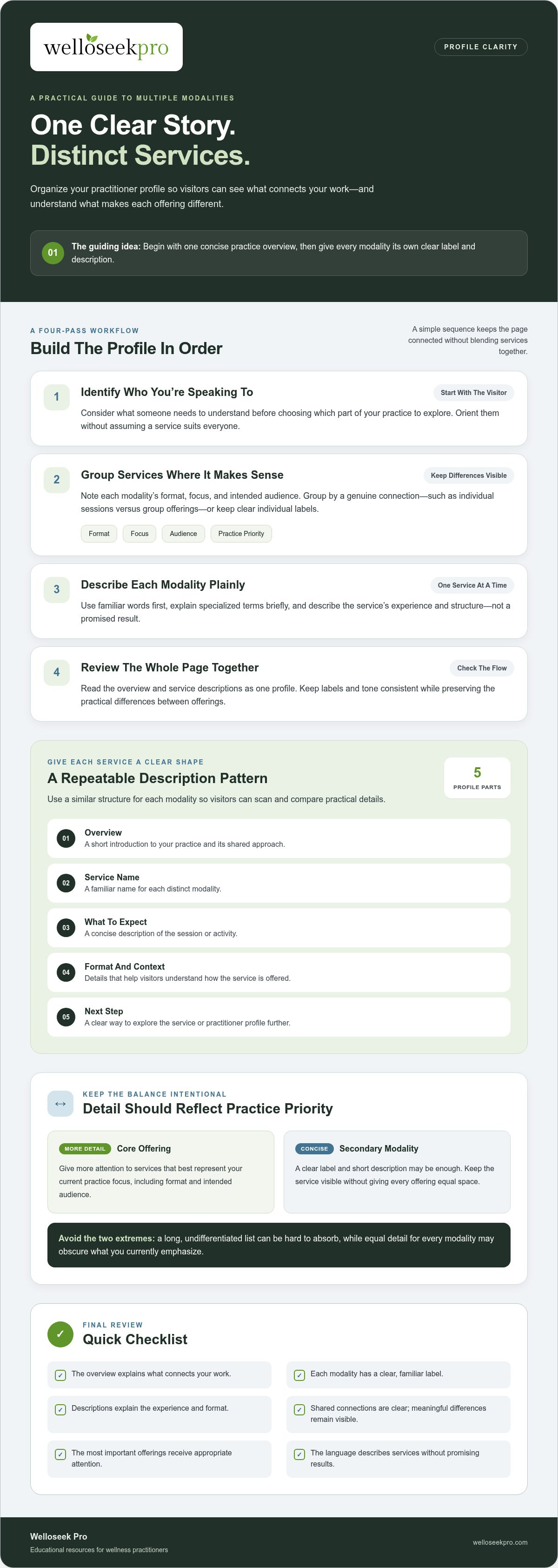
Plan a clear sequence before writing the final copy: identify who you’re speaking to, group the services, describe each one, then check that the language feels consistent. This organizes a multi-modality practice around real connections rather than a string of unrelated labels. A Welloseek directory profile can bring distinct modalities together while keeping the details of each service easy to find.
Start from the visitor’s perspective. What might someone need to understand before deciding which part of your practice to explore? You don’t need to predict their needs or make a service sound right for everyone. Use the overview to orient visitors, then give each offering a clear label and focused explanation.
Group Services Before Writing The Profile
Make a working list of every modality, then note its format, focus, and intended audience. Look for genuine connections, such as services offered to similar audiences or activities that share a broader practitioner approach. Keep meaningful differences visible, too. If two services use distinct formats, don’t combine them under a vague umbrella just to make the profile look simpler. Choose an order that reflects your current practice priorities.
The grouping doesn’t need to be elaborate. You might organize by format, such as individual sessions and group offerings, or by the type of interest each service addresses. If neither approach fits, list services under clear individual labels. The best structure helps visitors scan, understand, and compare without having to decode your personal shorthand.
Write A Clear Description For Each Modality
Use the same basic pattern for each service: name it, describe what happens, state its format, and add brief context about who may want to learn more. Use plain language, especially if a modality has a specialized name. Focus on the experience and structure of the service, not a promised result. Mention in-person or virtual formats only when they apply to that specific offering.
A simple profile outline can keep the page readable:
- Overview: A short introduction to your practice and its shared approach.
- Service name: The familiar name of each distinct modality.
- What to expect: A concise description of the session or activity.
- Format and context: How it’s offered and details that help visitors understand it.
- Next step: A clear way to explore the service or your practitioner profile further.
After drafting, read the overview and service descriptions together. Check that the labels are consistent, each description gives comparable information, and the tone sounds like one practitioner while preserving the differences between services. This final pass is an essential part of optimizing your profile for different modalities. To present your services in a directory profile, explore Welloseek’s profile plans.
How To Compare And Explain Modalities Without Blurring Them Together
A side-by-side comparison can make a multi-modality profile easier to scan, especially when visitors are deciding which service to read about first. Compare practical details, not which offering is “best.” The goal is to make each modality’s format and focus understandable while keeping your overall approach consistent.
Use the same fields for every service. For example, a practitioner offering yoga instruction and nutrition education could describe them like this:
- Modality: Yoga instruction. Format: Group class or individual session, if offered. Focus: Guided movement and postures. Useful context: Visitors can tell whether the session is individual or group-based.
- Modality: Nutrition education. Format: One-to-one discussion or workshop, if offered. Focus: General food and nutrition topics. Useful context: Visitors can see the session format and the subjects it covers.
These are examples of structure, not claims about a particular practitioner. Include only details that accurately describe your own services. If a format or focus differs, say so plainly. A comparison should clarify distinctions, not rank modalities, imply one suits everyone, or predict what someone will experience afterward.
Which Details Help Visitors Distinguish Services?
Choose details that answer everyday questions: Is the service individual or group-based? Is it in person, virtual, or available in both formats? What does a participant do during a session, and what topics are covered? For example, a visitor may want to know whether a class involves guided movement or whether an educational session is a conversation, presentation, or another format. Share only specifics that accurately describe your service.
Context can help visitors see where to look next without suggesting that a service is right for them. Say who might be interested in learning more, using neutral language such as “for people curious about guided movement.” Avoid saying a modality will meet a particular need or deliver a specific result.
How To Keep Claims And Language Grounded
Describe your approach, session structure, and perspective directly. Avoid clinical-sounding promises, guaranteed outcomes, or wording that could imply qualifications or endorsements the profile doesn’t establish. When reviewing a draft, ask whether a visitor could mistake a general description for a health claim or certainty about results. Revise any wording that overstates what the service does.
Read every service description aloud, then compare them side by side. Give each one a similar level of detail so vivid language in one entry doesn’t make another seem less considered. Shared values can appear in the overview, while individual descriptions explain each modality on its own terms. This balance is central to optimizing your profile for different modalities: a coherent voice, clear distinctions, and useful context that lets visitors explore at their own pace.
A Practical Checklist For Reviewing Your Multi-Modality Profile
A profile review is easier when you move through the page in order, from the opening summary to the final next step. Read it as someone encountering your practice for the first time. Can they tell what your practice broadly offers, distinguish one modality from another, and understand how to explore each service? If they have to interpret unfamiliar labels or guess what happens in a session, revise for clarity.
Use A Simple Profile Review Process
Check the overview first. It should introduce your practice before presenting a list of services. Then review each service label and description on its own: is the name understandable, does the description explain what the offering involves, and are the format details accurate? Finally, look at the end of the profile. A clear next step might invite visitors to explore a service description or your practitioner profile further, without suggesting that a particular result is guaranteed.
Try a quick clarity test with a colleague. Ask them to read the profile, then describe each modality back to you in their own words. Listen for places where they mix up services, misunderstand a specialized term, or miss an important difference in format. Their questions can reveal wording that seems clear to you because you already know your work.
A compact structure can make gaps easier to spot:
- Practice overview: A short description of the practice and its shared approach.
- Modality label: The name of each distinct service.
- Description: What the service involves, in plain language.
- Format: Accurate details about how it’s offered.
- Next step: A simple way for visitors to continue exploring.
Quick Checklist For Multiple Modalities
Use this list for a final pass. Consider each item from the visitor’s perspective, not just whether the profile includes every detail you want to share.
- The opening summary describes the practice clearly before listing modalities.
- Each offering has a distinct label and a plain-language description.
- Format details match how each service is actually offered.
- Shared wording connects the profile, while differences between services remain clear.
- The profile gives visitors a next step without promising outcomes.
If a description is difficult to explain simply, revisit how you name and frame the offering. Welloseek Pro’s guidance on clarifying your offer can help you refine the language, and profile-upgrade resources can support a broader review of how your information comes together. Thoughtful optimization means checking both the individual service details and the overall experience of reading the page.
Explore Welloseek Plans For A Clearer Practitioner Profile
A multi-modality profile doesn’t need to make every service sound the same. Clear grouping, straightforward descriptions, and an easy-to-follow structure help visitors understand how your practice fits together while seeing what makes each offering distinct. That clarity gives people a useful starting point for exploring your work without promising what they’ll choose or what results they’ll experience.
Welloseek is a directory where practitioners can present multiple modalities within one profile. Bring your practice information together and describe each service in context. Your profile can reflect your current focus while making other offerings visible. As your services or emphasis evolve, revisit the overview and descriptions so the page continues to represent your practice accurately.
Clear communication is an ongoing practice, not a one-time edit. Language that feels natural to you may be unfamiliar to someone encountering a modality for the first time. Read the profile from a visitor’s perspective, check that each service has its own understandable description, and make sure the next step is easy to find. These practical refinements are at the heart of optimizing your profile for different modalities.
Make The Next Step Easy To Understand
If you’re considering a directory profile, compare the plans with your practice needs. Practitioners seeking visibility for their services can use a profile to present their practice and distinct modalities in one place. Think about what you want visitors to see, such as your practice overview, service descriptions, and the formats you offer. Then decide whether a Welloseek profile is a useful next step. Clear profile language remains valuable wherever you share it.
A directory profile gives you space to present your practice, while thoughtful descriptions help communicate what you offer. Neither replaces careful, accurate wording, and a profile should not be treated as a guarantee of visibility, inquiries, or bookings. Use it as one way to organize and present your practice information.
Close With A Brief, Grounded Reminder
Return to your profile whenever your services, formats, or focus change. Update details that no longer fit, keep each modality distinct, and make sure the whole page still sounds like one practice. A calm, clear profile helps visitors explore at their own pace.
Explore Welloseek Plans
Welloseek Pro provides educational resources for wellness practitioners. It does not provide medical care, diagnosis, or treatment.
Give Your Practitioner Profile Room To Evolve
Your profile can grow alongside your practice. As your focus shifts or you refine how you describe a modality, revisit the language and make sure it still reflects the work you offer. Optimizing your profile for different modalities is an ongoing practice of clear communication, not a one-time polish.
Welloseek offers a directory space for presenting multiple modalities, while Welloseek Pro provides practical profile and marketing education for wellness practitioners. Use those resources to shape a profile that feels true to your practice today, then adjust it as your services develop. You don’t need to make every detail perfect before taking the next step. Start with the information visitors need to orient themselves, then refine from there.
Keep your approach grounded, your descriptions clear, and your profile open to thoughtful updates. You can make it easier for visitors to understand your practice, one considered edit at a time.
Frequently Asked Questions
How Do I List Multiple Wellness Modalities On One Profile?
Give every service its own recognizable name and place it where visitors can scan the page easily. Use the commonly understood name as the label, then clarify a less familiar term nearby if needed. Keep the order intentional, such as presenting your main focus first. On Welloseek, practitioners can use one profile to present multiple modalities, helping visitors view the offerings as part of one practice.
Should I Create A Separate Profile For Each Modality?
If the modalities belong to one practitioner and one practice, a single profile can communicate them together without creating separate pages for each service. Welloseek supports multi-modality practitioner profiles. Consider what visitors need to understand: if separate profiles would repeat the same introduction and make your services harder to connect, one profile may be simpler. Keep each offering distinct within it and follow the directory’s profile setup guidance.
How Can I Explain Different Modalities In Plain Language?
Pair the modality’s name with a short explanation of what a visitor would encounter. For example, introduce a specialized term and follow it with a familiar description of the activity or session format. Keep the explanation accurate rather than replacing the modality’s meaning with a broad wellness phrase. Ask someone unfamiliar with your field to point out words they’d need defined, then clarify those terms.
Can I Offer In-Person And Virtual Services In The Same Profile?
Yes. A profile can describe both formats, as long as visitors can tell which format applies to each service. Avoid placing “in person and virtual” only in the general overview if the options differ by modality. Instead, state the format beside the relevant service and update it if your offering changes. Welloseek is a directory for discovering holistic wellness professionals who offer in-person or virtual services.
What Should I Include In A Description For Each Modality?
Include the service name, what participants do, how the session is structured, and any practical preparation details that matter. If session length, materials, or format are useful, include them only when they accurately reflect the current offering. You can also describe the topics covered without suggesting that the service treats a condition or guarantees a personal result. A reader should finish with a realistic picture of the experience.
How Often Should I Update A Multi-Modality Practitioner Profile?
Review your profile whenever an offering changes, such as a shift in format, session structure, or the services you currently emphasize. It’s also useful to revisit it when a description no longer matches how you explain the service in conversation. Optimizing your profile for different modalities is ongoing: make a small edit when needed instead of waiting until several details have become outdated.
How Can I Connect Different Services Without Making Them Sound The Same?
Describe the practitioner perspective that genuinely runs through your work, then give each modality its own language for its focus and format. For example, you might say that your practice makes space for reflection, while separately explaining what a meditation session involves and what a movement session involves. Avoid claiming that services produce the same effects. A shared value can create continuity without flattening the differences visitors need to understand.

Article by
Welloseek Pro Editorial Team
Welloseek Pro publishes practical guides, templates, and checklists to help holistic wellness practitioners improve visibility, strengthen profiles, and grow sustainably. Content is for informational purposes only and is not medical, legal, or professional advice
Disclaimer
Welloseek Pro is an educational resource site for holistic wellness practitioners. This article is for general informational purposes only and is not medical, legal, or professional advice. Welloseek (welloseek.com) is a directory for discovering wellness providers; listings are not endorsements and do not imply verification of a provider’s licensure, training, credentials, or results. If you have a medical or mental health concern, please consult a licensed healthcare professional.